When the Cart Gets in the Way

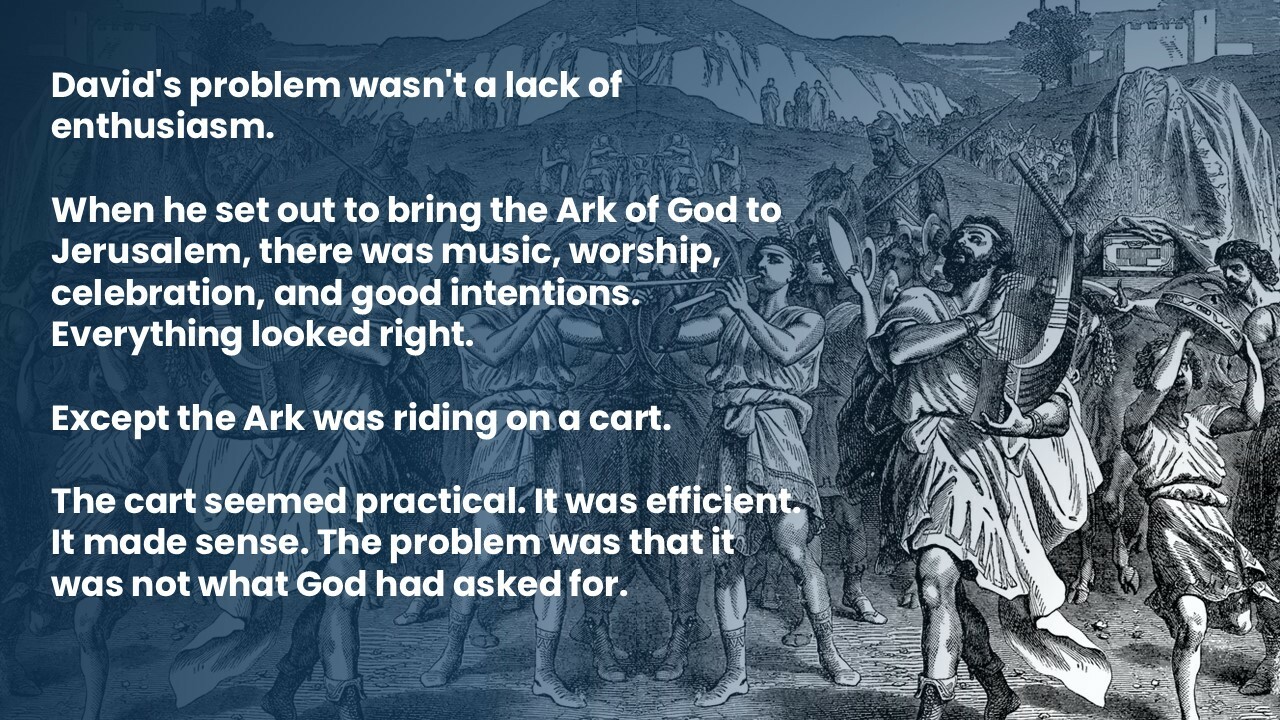
David's problem wasn't a lack of enthusiasm.
When he set out to bring the Ark of God to Jerusalem, there was music, worship, celebration, and good intentions. Everything looked right.
Except the Ark was riding on a cart.
The cart seemed practical. It was efficient. It made sense. The problem was that it was not what God had asked for.
Years later David recognized the deeper mistake: "We did not inquire of Him." He had assumed that what worked for everyone else would work for God's people as well.
I wonder how often I do the same thing.
Most of us don't have wooden carts in our lives, but we carry cultural carts into our relationship with God all the time.
The cart might be the belief that being busy is the same as being faithful. It might be measuring our spiritual lives by productivity rather than prayer. It might be the assumption that comfort is more important than growth, or that sincerity is enough without obedience.
A cart is anything I substitute for the slow, intentional work of walking closely with God.
What strikes me most about this story is that God does not abandon David. The failed procession becomes an invitation to deeper relationship. David stops, reflects, learns, and tries again.
That is holiness.
Not perfection. Not getting everything right.
Simply allowing God to correct us.
Only after David humbled himself did he dance before the Lord with joy. The joy came after the surrender.
Perhaps that's the question for each of us this week:
What cart have I allowed to come between myself and God?
And what might happen if I set it down?
The good news is that God is always inviting us back into relationship. And often, on the other side of humility and obedience, we discover what David discovered:
Joy.